
Index
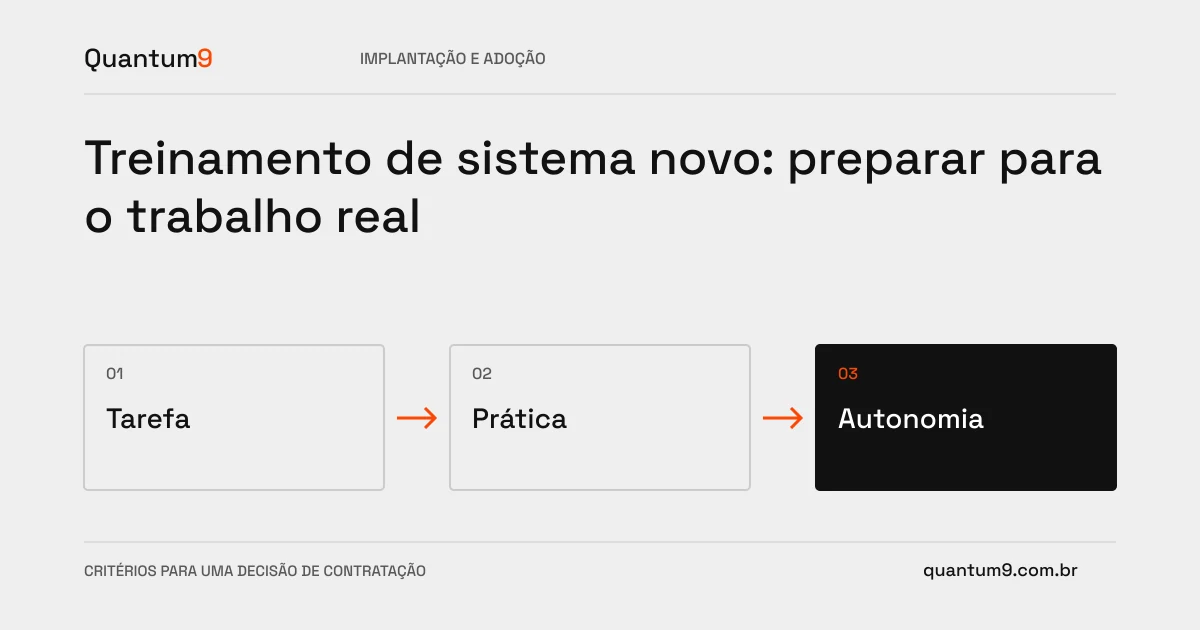
A presentation of features does not necessarily prepare the team to work on the system. Training should start from the tasks of each role, including frequent mistakes and situations that require help.
How to evaluate this decision
Map journeys and prior knowledge. Use appropriate scenarios and training data without exposing unnecessary real information. Combine guided practice with short reference materials. The company needs to set aside time for learning and define who answers questions after launch. Product changes must update materials so as not to perpetuate incorrect instructions.
Criteria for comparing proposals
- Roles: separate tasks of operators, approvers and administrators.
- Practice: allow executing flows and correcting errors in an appropriate environment.
- Support: indicate channel, person responsible and material for subsequent consultations.
A scenario to discuss with the supplier
Hypothetical example: The team learns how to create requests, but not how to return an incomplete request. On the first day of use, the exception becomes a message queue outside the system.
What to validate upon delivery
Ask participants to complete tasks without step-by-step guidance. Register doubts and update interface or material when the difficulty reveals a recurring problem of understanding.
Prepare the conversation about the project
Quantum9 can include operational preparation in software delivery. Bring roles, shifts and critical tasks to scale training and support without relying on a single lecture session.
Software evolution and deployment · Map the company's priority