
Index
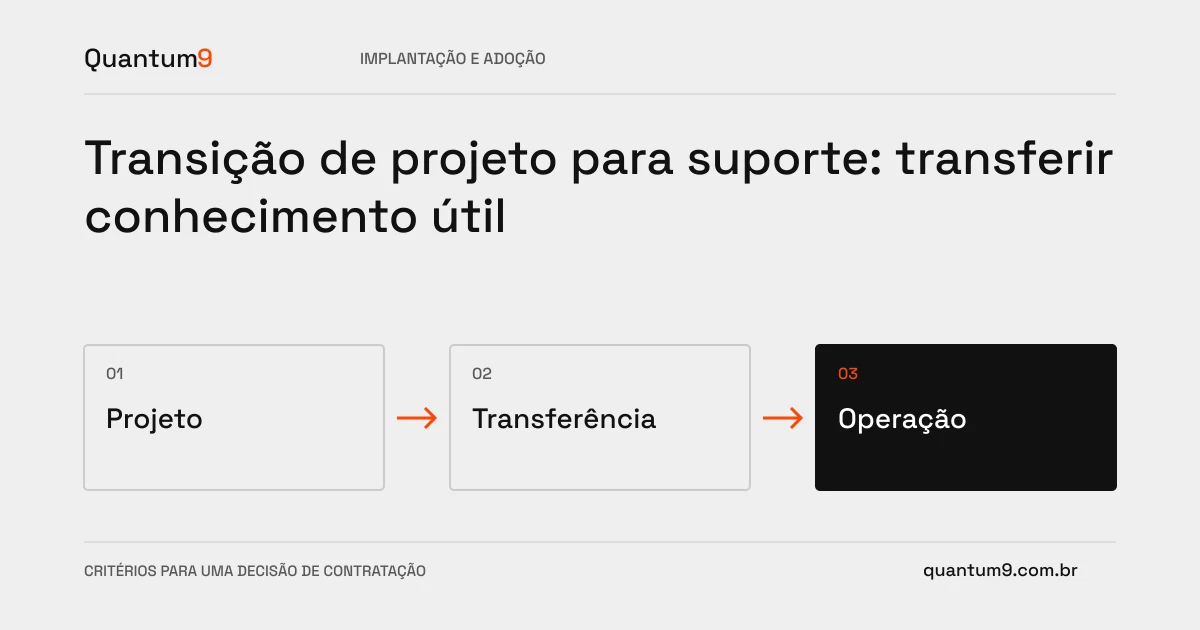
Ending development without preparing support leaves the operation dependent on those who participated in the project. The transition needs to transfer context, authorized access and procedures, with responsibilities accepted by the teams.
How to evaluate this decision
List components, integrations, and routines that require monitoring. Define what is an incident, doubt and evolution, according to the service agreement. Organize environments, documentation and known issues. The team that takes over must practice diagnostic tasks before those who built the solution leave. Secrets must remain in appropriate media, not in manuals or open messages.
Criteria for comparing proposals
- Responsibility: establish channels and owners for each part of the operation.
- Knowledge: include dependencies, limits and reasons for important decisions.
- Backlogs: recording known issues and priorities without presenting them as resolved.
A scenario to discuss with the supplier
Hypothetical example: the system depends on a daily routine, but no one in support knows how to check its execution. The transition must include this monitoring and anticipated action in the event of failure.
What to validate upon delivery
Run an incident simulation with the team that will take over. Check access, documentation and escalation, recording gaps before completing the transfer.
Prepare the conversation about the project
Bring Quantum9 current contracts, architecture and responsible team. The transition scope must be verifiable and compatible with the contracted service, without assuming continuous coverage that has not been agreed upon.
Software evolution and deployment · Map the company's priority