
Index
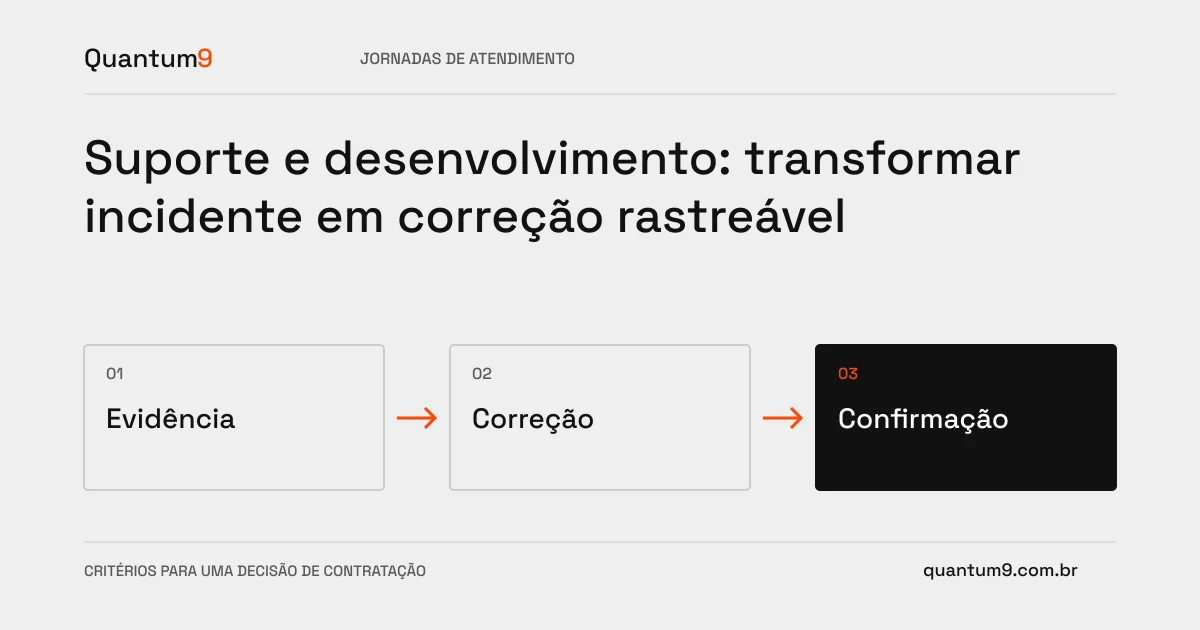
A ticket forwarded to engineering must contain sufficient evidence for investigation. Copying the complaint without environment, version and reproduction creates back and forth and makes it difficult to communicate progress to the customer.
How to evaluate this decision
Define the minimum context set and protect data that is not necessary for diagnosis. Relate multiple tickets to the same technical issue without automatically closing them all when a code changes. The fix needs to be published and verified in the affected scenario. Separate incident, defect and improvement request to avoid incompatible deadline promises.
Criteria for comparing proposals
- Screening: collect expected and observed behavior and conditions of occurrence.
- Link: maintain a relationship between tickets and technical item, with understandable states for support.
- Feedback: register corrected version, validation and guidance for affected customers.
A scenario to discuss with the supplier
Hypothetical example: a fix resolves the error for new records, but old data remains inconsistent. The flow must also monitor the processing of these records before communicating complete resolution.
What to validate upon delivery
Step through an incident from opening to fix confirmation. Check reopening, multiple clients and attachment protection. The move from development to support must have usable evidence.
Prepare the conversation about the project
Quantum9 can integrate tools and organize work states. Bring the current flow, available fields and causes of rework to define a deliverable that reduces loss of context.
Conversational commerce · Map the company's priority