
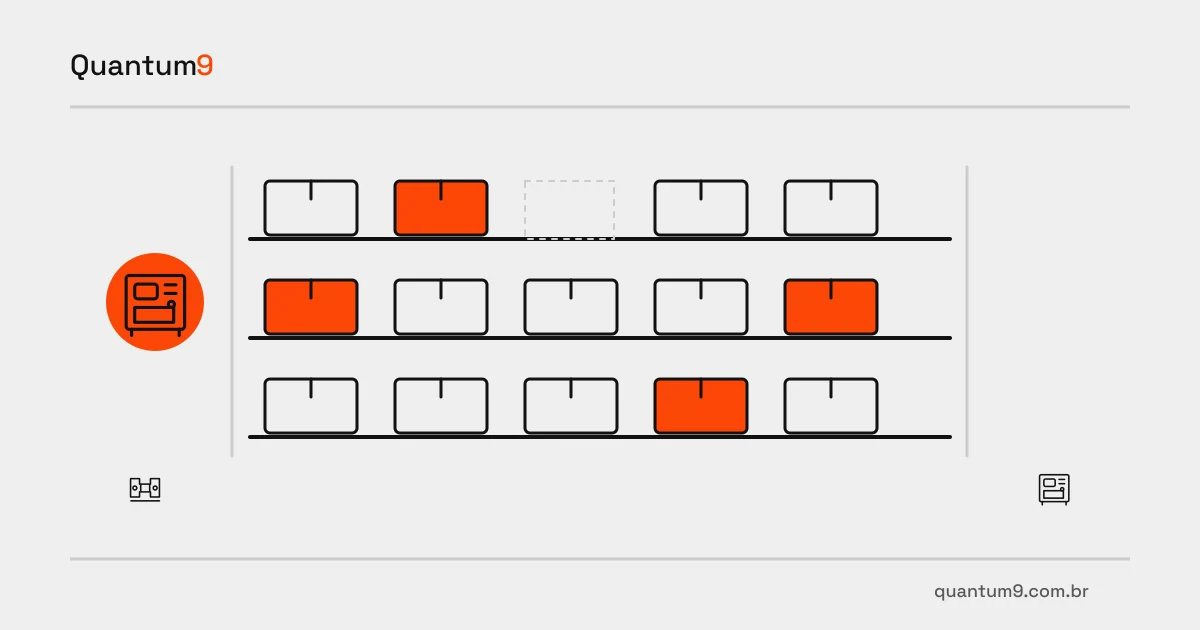
A transfer must record donor equipment, recipient and authorization; moving the part must not automatically make the donor available.
Index
Removing a component from idle equipment can solve an urgent issue but leaves another machine incomplete unless the move is tracked.
The rule that changes the scope
A transfer must record donor equipment, recipient and authorization; moving the part must not automatically make the donor available.
Inventory tracks loose parts; a targeted module links installed components and dependencies created by removal.
Removal authorization should make clear whether donor equipment remains stopped and which team will restore it. Without that information, the movement resolves one urgent problem while creating another unnoticed one. Scope should include lookup by component and by both machines. A removed part does not immediately become free inventory: its observed condition and required checking must stay visible throughout the transfer instead of disappearing into a stock adjustment.
Specify operational deliverables
- Identify the removed component, installation position and observed condition on the donor equipment.
- Show the replacement task created for the machine that supplied the part.
- Link installation confirmation to recipient equipment without erasing the component's origin.
Test the exception before acceptance
In a hypothetical scenario, the transferred part returns after the service visit; both machines must retain coherent states and their assembly history.
Reference for assessing scope
NN/g: writing task scenarios for usability testing
Prepare your project with Quantum9
Bring a recent transfer and the identification method used for installed components.