
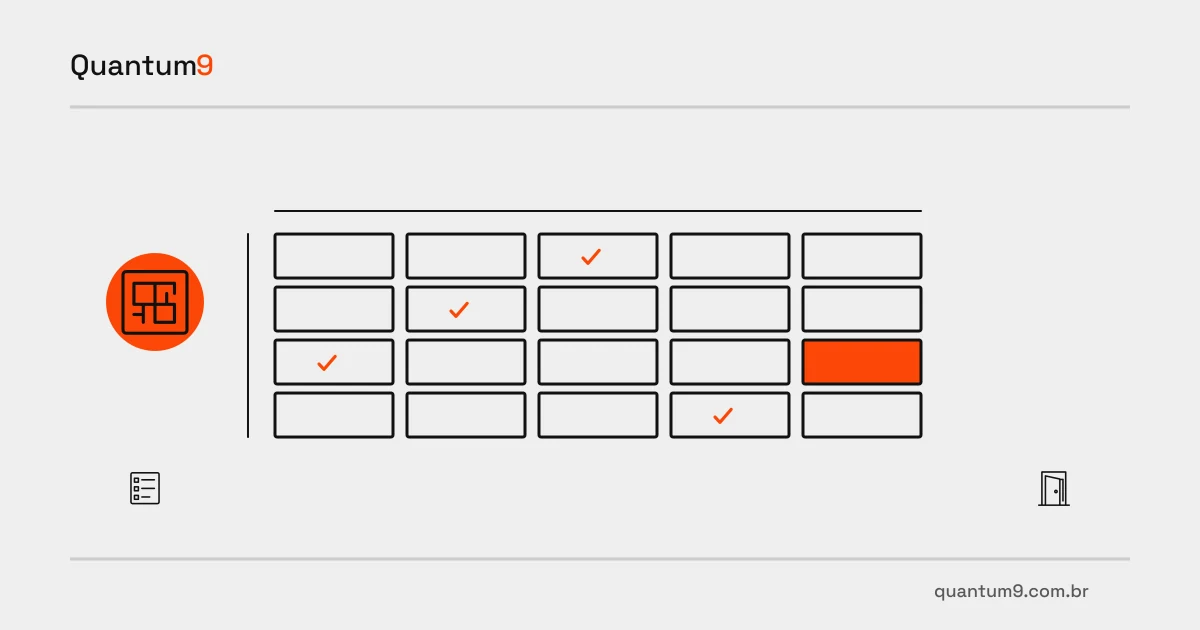
Execution must identify area, agreed frequency and completed activity while separating staff coverage from service verification.
Index
Recorded attendance does not prove every contracted area received service; review must follow the actual contract scope.
The rule that changes the scope
Execution must identify area, agreed frequency and completed activity while separating staff coverage from service verification.
Existing scheduling covers attendance; a custom application suits customers reviewing areas and execution exceptions separately.
Expected frequency can vary by area and day; do not replicate one checklist across every room without checking the contract. Staff should record unplanned activity separately instead of using it to compensate for an untreated area. The customer needs to understand what was performed and what depends on access. That visibility is more useful than a general completed badge based solely on team attendance at the premises.
Specify operational deliverables
- Link each activity with its area and contractual frequency rather than relying only on a location name.
- Record access restrictions and route the outstanding task to the customer's owner.
- Keep staffing changes without rewriting the original service plan.
Test the exception before acceptance
In a hypothetical scenario, an area is inaccessible during a visit; the record must show outstanding work instead of declaring the entire contract completed.
Reference for assessing scope
NN/g: writing task scenarios for usability testing
Prepare your project with Quantum9
Bring an area map and a review where service was only partly performed.