
Index
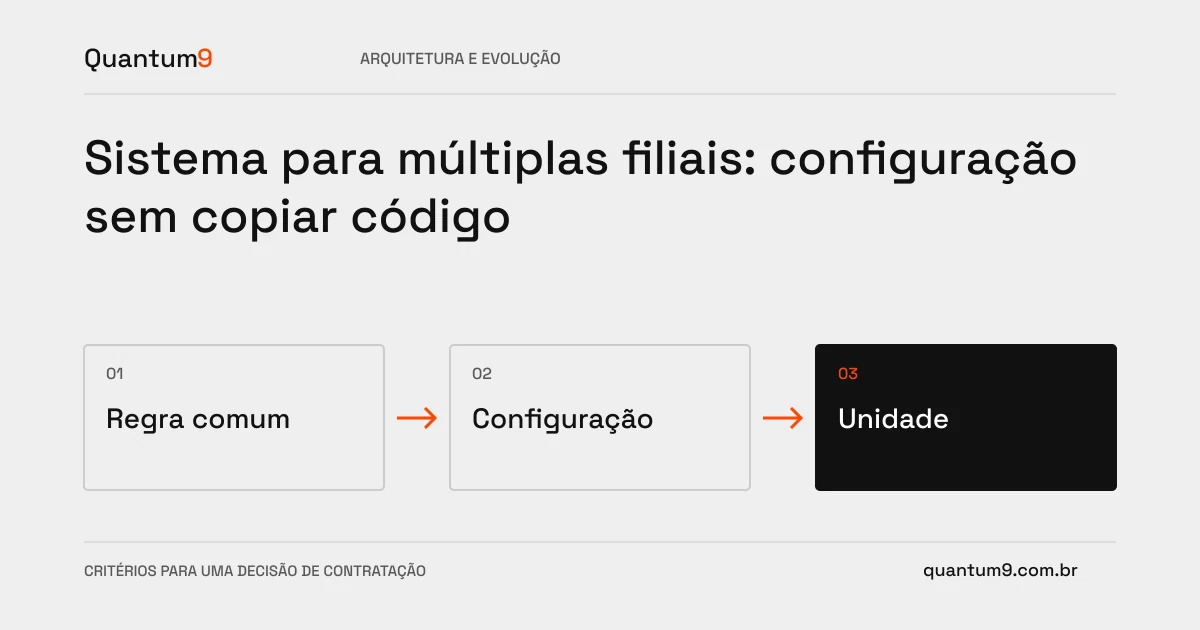
Copying an application to each branch creates versions that degrade over time. A configurable model can preserve common rules and allow for controlled operational differences.
How to evaluate this decision
Map out what varies by unit: calendar, responsible parties, limits or stages. Differentiate legitimate configuration from a rule that needs to be reviewed in the process. The system must have standards and validations to avoid incoherent combinations. Permissions and data must respect unity, including in reports and integrations.
Criteria for comparing proposals
- Model: classify global, configurable and context-specific rules.
- Administration: control who changes settings and when they take effect.
- Evolution: Test changes with different drive profiles before release.
A scenario to discuss with the supplier
Hypothetical example: two branches have different opening hours, but the same approval flow. Configuring calendar should not require maintaining two versions of the entire module.
What to validate upon delivery
Deploy units with real differences and provide isolation and consolidation. Test configuration changes without changing the history of previous operations.
Prepare the conversation about the project
Quantum9 can evaluate the current base and design the configuration. Bring differences between branches and expansion plans to avoid both code copies and excessive parameterization.
Software architecture · Map the company's priority