
Index
The decision to replace a system can be made per module, considering value and dependencies. A periodic review helps to distinguish critical limitations of components that continue to serve the operation well.
How to evaluate this decision
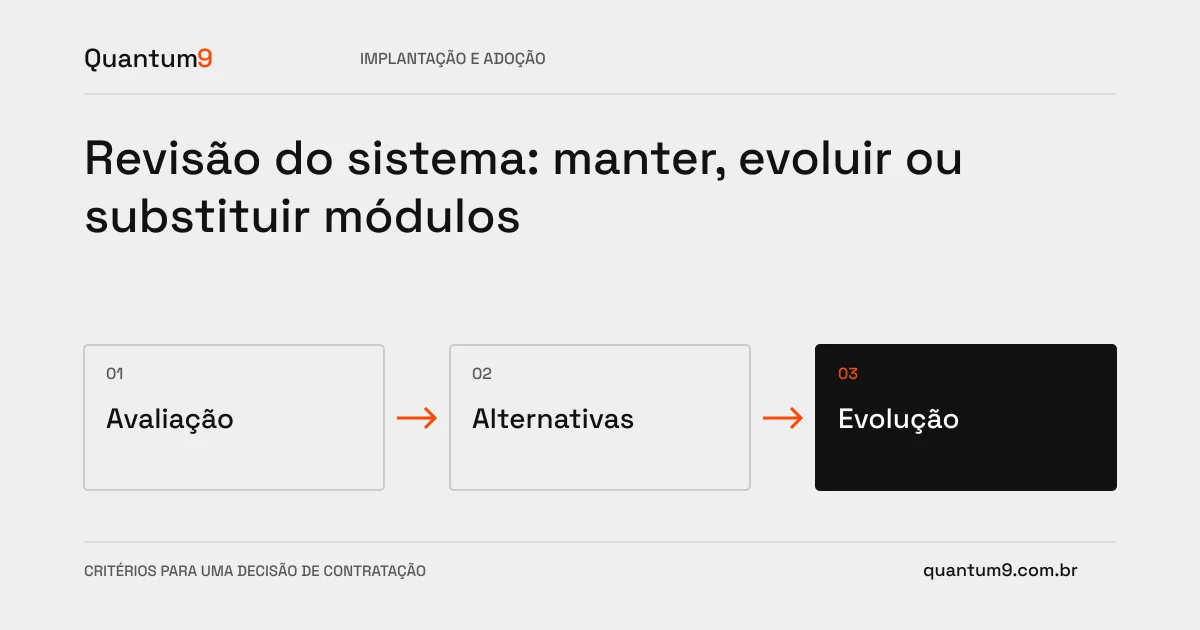
Evaluate usage, incidents, maintenance cost and changeability. Relate each module to processes and integrations before proposing withdrawal. Compare localized fixes, evolution and replacement, including transition and training. The review should produce decisions and responsible parties, not a growing list of technologies considered old with no evidence of impact.
Criteria for comparing proposals
- Value: identify tasks fulfilled and consequences of unavailability or withdrawal.
- Dependencies: map data and integrations shared with other modules.
- Alternatives: compare total cost and risk of each path, with documented uncertainties.
A scenario to discuss with the supplier
Hypothetical example: the reporting module limits new analyses, but the central registry is stable and reliable. Evolving the data layer can be more proportional than rebuilding the entire application.
What to validate upon delivery
For each recommendation, require a demonstrated problem, alternative, and success condition. Confirm that the decision includes impact on users and continuity of dependent processes.
Prepare the conversation about the project
Quantum9 can evaluate and plan gradual evolution. Bring architecture, incidents and priorities to build an operation-based investment roadmap, without treating technology age as sufficient justification for replacement.
Software evolution and deployment · Map the company's priority