
Index
Automation does not generate returns just by performing tasks faster. The gain depends on how much work no longer exists, how the freed capacity will be used and how much it costs to operate the new flow.
How to evaluate this decision
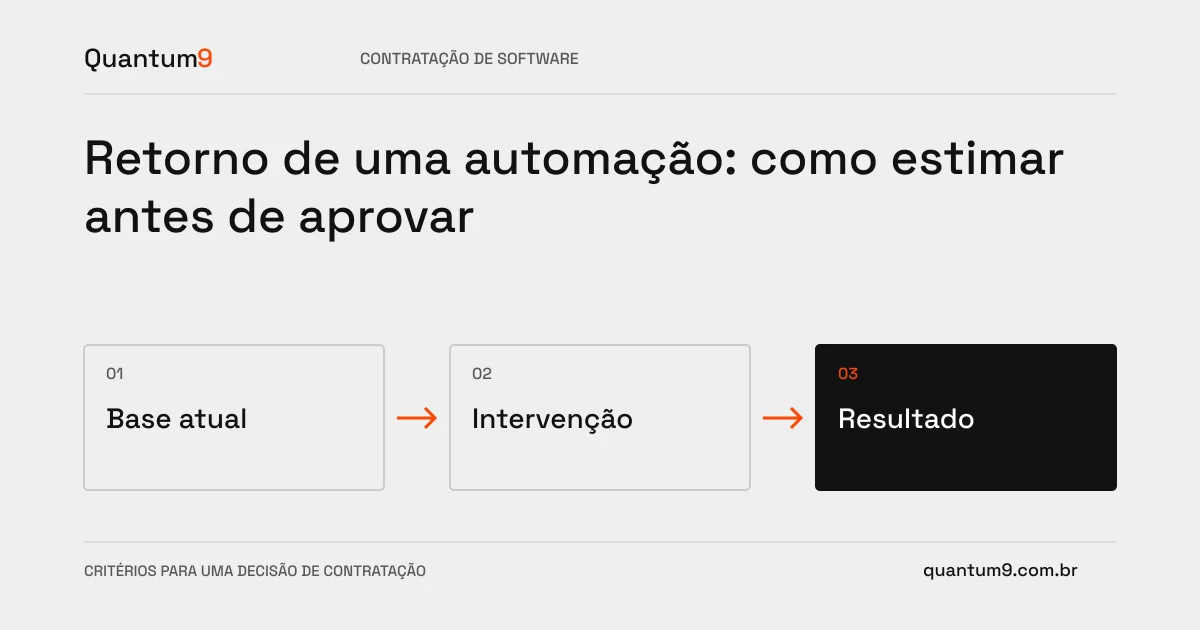
Measure volume, active time, and frequency of exceptions in the current process. Separate waiting time from human effort: reducing a queue does not mean saving every hour of the break. Project conservative and expected scenarios, discounting review, maintenance and licenses. Avoid adding the same benefit such as personnel savings and increased capacity if both represent the same hours.
Criteria for comparing proposals
- Base: observe a sample of representative tasks and record rework, seasonality and variations between teams.
- Benefit: distinguish effective savings, available capacity, risk reduction and deadline improvement.
- Cost: include implementation, integration, training, supervision and treatment of failures that continue to exist.
A scenario to discuss with the supplier
Hypothetical example: checking documents takes minutes, but approval takes days due to lack of person responsible. Automating reading can reduce effort, while redesigning the queue can reduce time. They are different interventions, with different metrics.
What to validate upon delivery
Combine measurement before development and repeat observation after stabilization. Compare equivalent periods and record changes in volume or staff. Without this basis, any percentage of gain is difficult to attribute to the software.
Prepare the conversation about the project
To evaluate automation with Quantum9, present examples of work, monthly volume, exceptions and the destination of the freed capacity. The diagnosis must produce verifiable premises and a first flow with observable benefit.
Software engineering · Map the company's priority