
Index
A list of brands supported does not explain the role of a supplier in each project. To evaluate experience, look for evidence of participation, scope and continuity compatible with the work your company needs to hire.
How to evaluate this decision
Ask for examples in which the supplier explains the problem, responsibilities, decisions and limitations. Differentiate comprehensive development, consultancy, integration and participation in a larger team. A visually similar project may have very different operational requirements. References are most useful when they allow you to understand how the partner handled changes, failures and knowledge transfer, while respecting client confidentiality.
Criteria for comparing proposals
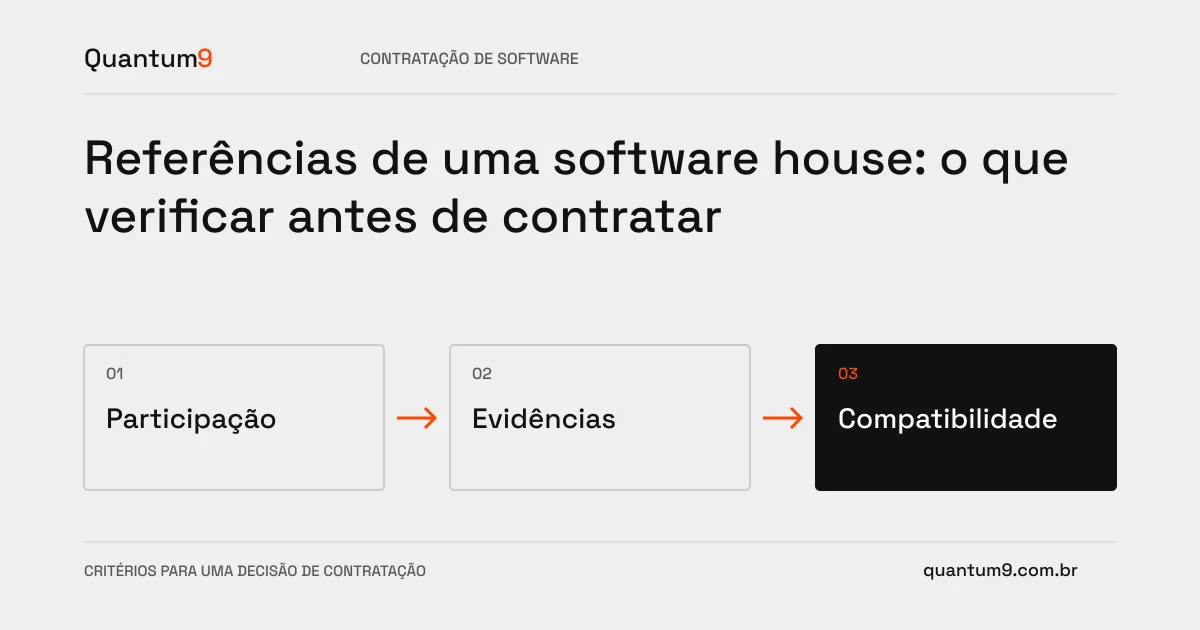
- Participation: identify which modules, steps and decisions were the direct responsibility of the team.
- Context: compare integrations, criticality, users and restrictions with your scenario, without requiring an identical case.
- Continuity: ask about documentation, maintenance and behavior after the first publication.
A scenario to discuss with the supplier
Hypothetical example: A vendor showcases a well-known application, but only participated in the design of a screen. This experience may be relevant for UX, but it does not prove the ability to operate the entire backend. The reference must support the competency being assessed.
What to validate upon delivery
When authorized to talk to a reference client, prepare questions about observable facts. Avoid asking for confidential business data. Compare the answer with the scope presented and record questions that need to be included in the proposal.
Prepare the conversation about the project
When talking to Quantum9, describe the competence you need to validate and the complexity of the operation. Request cases with identified role and technology, plus an explanation of how the approach applies to your problem.
Software engineering · Map the company's priority