
Index
Reports, imports and file generation can take longer than an interactive request can handle. Asynchronous processing helps when the application also reports status, result, and recovery.
How to evaluate this decision
Separate execution request and define how the user follows the task. Plan queue, priority, repetition and cancellation according to the operation. An accepted task should not be shown as completed. If processing changes records, consider partial effects and the ability to resume without repeating what has already been applied.
Criteria for comparing proposals
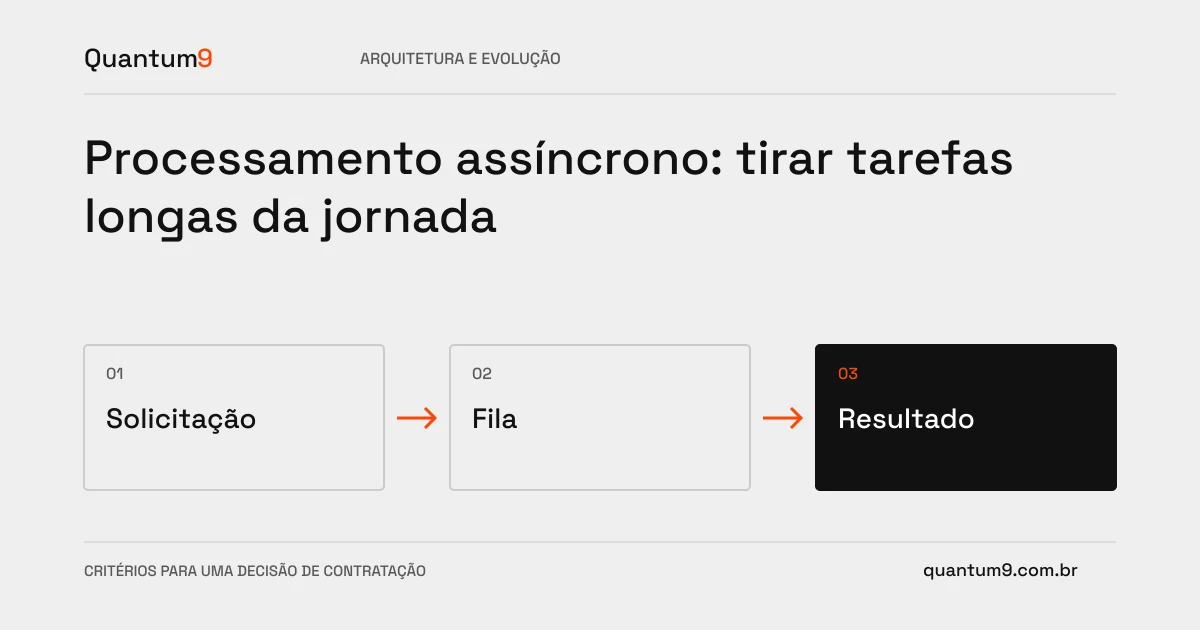
- Input: Validate the request and return an identifier for tracking.
- Execution: control competition and record useful progress, without inventing percentages.
- Result: provide conclusion, failures and possible actions persistently.
A scenario to discuss with the supplier
Hypothetical example: A report takes several minutes. The user must be able to leave the page and find the result later, without starting another generation with each update attempt.
What to validate upon delivery
Test worker interruption, repeated task and partial error. Check that the status presented corresponds to the actual processing and that files respect the permissions.
Prepare the conversation about the project
Report long tasks, volume and impact of repetition to Quantum9. The proposal must include tracking experience and queue operation, as well as background processing.
Software architecture · Map the company's priority