
Index
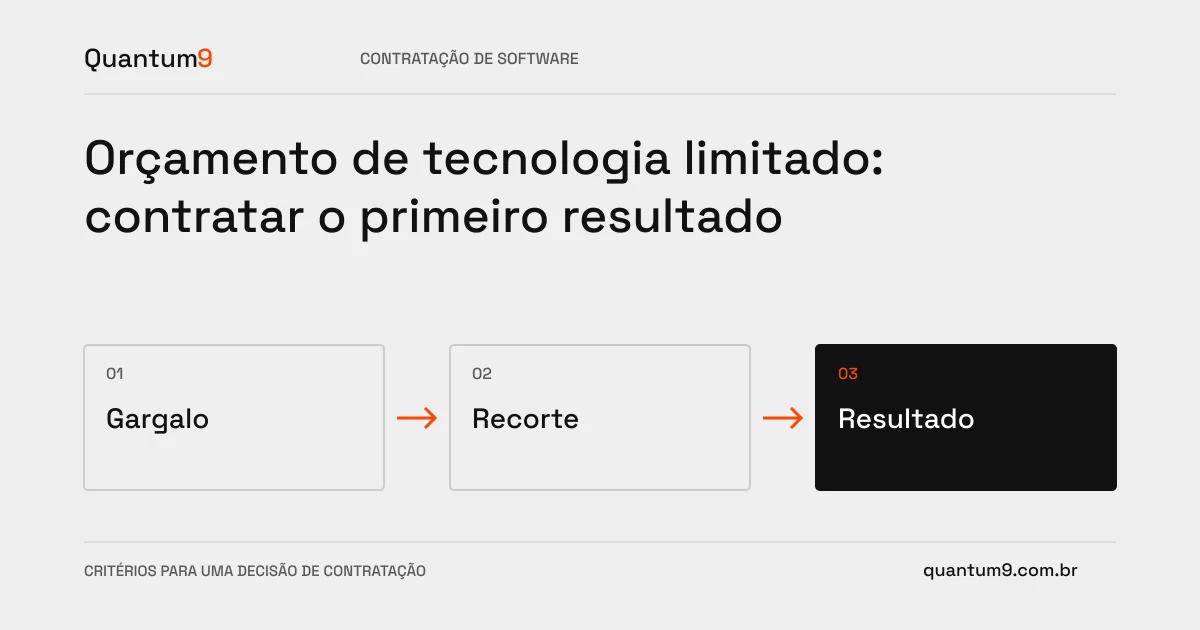
A limited budget calls for a cutout that works from end to end. Distributing little investment among many initiatives can leave several interfaces ready and no usable processes.
How to evaluate this decision
Choose a bottleneck with known culprit, volume and consequence. Map your dependencies and look for the smallest intervention that changes the outcome: an integration, an approval step, or a business journey. Reducing scope does not mean removing essential controls. Authorization, data integrity, and recovery need to accompany the first use when they are necessary for the process.
Criteria for comparing proposals
- Priority: compare operational impact, urgency, dependencies and adoption capacity, avoiding scores without evidence.
- Cutout: define the beginning, end and exceptions of the flow that will be delivered, with understandable exclusions.
- Continuity: estimate operation and maintenance so as not to consume the entire investment just in construction.
A scenario to discuss with the supplier
Hypothetical example: the company wants to replace five spreadsheets, but the biggest loss occurs when transferring approved orders to the ERP. Integrating this process can be a more useful first cycle than building five incomplete records.
What to validate upon delivery
Demonstrate the chosen journey with a normal situation and an exception. Make sure the team can operate without relying on the developer for every fix. Only expand the scope after observing the use, flaws and benefits of the initial cut.
Prepare the conversation about the project
Bring Quantum9 the investment limit, prioritized problems and existing tools. A responsible proposal must explain the possible result in this cycle, the client's dependencies and the items that will be left for another decision.
Software engineering · Map the company's priority