
Index
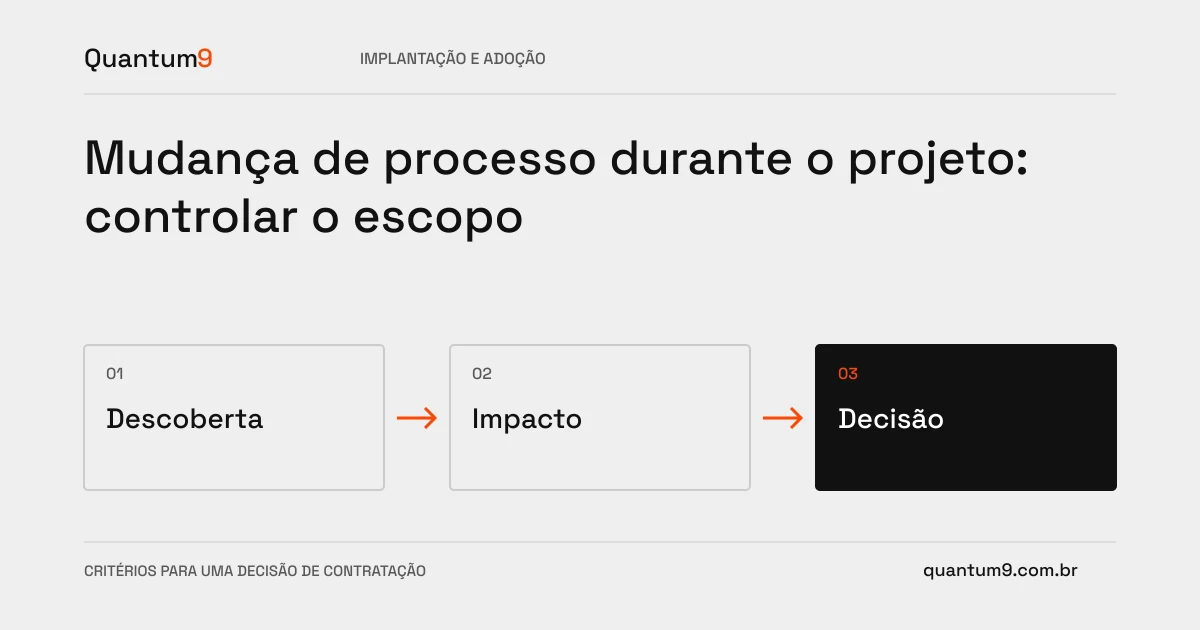
A project may reveal that the process needs to change before automation. Incorporating this discovery requires evaluating impact and responsibility, without turning all learning into a silent change in time and cost.
How to evaluate this decision
Record the problem and desired outcome before discussing screens. Compare maintaining the process, adjusting it or postponing the automation of that step. Identify dependencies in rules, data, and training. Each approved change must update the scope and acceptance criteria. The team needs to know who decides when different areas have conflicting priorities.
Criteria for comparing proposals
- Impact: Assess work already done, integrations, and affected preparation activities.
- Priority: distinguish requirement correction, discovery and new demand.
- Agreement: record the decision and the consequence on deliveries and calendar.
A scenario to discuss with the supplier
Hypothetical example: During development, the company decides to add financial approval to all orders. The change involves roles, notifications and exceptions; it's not just an additional button.
What to validate upon delivery
Review the updated flow with those responsible and check end-to-end scenarios. Avoid approving a single screen without considering the effects on those who initiate, approve, and follow up on the request.
Prepare the conversation about the project
Quantum9 can support process definition and implementation. Bring pending and responsible decisions to organize changes in a transparent way, keeping the proposal aligned with what will actually be delivered.
Software evolution and deployment · Map the company's priority