
Index
During an incident, the team needs to know who decides, who investigates and who communicates. A prepared process avoids competing actions and messages that promise a solution that has not yet been confirmed.
How to evaluate this decision
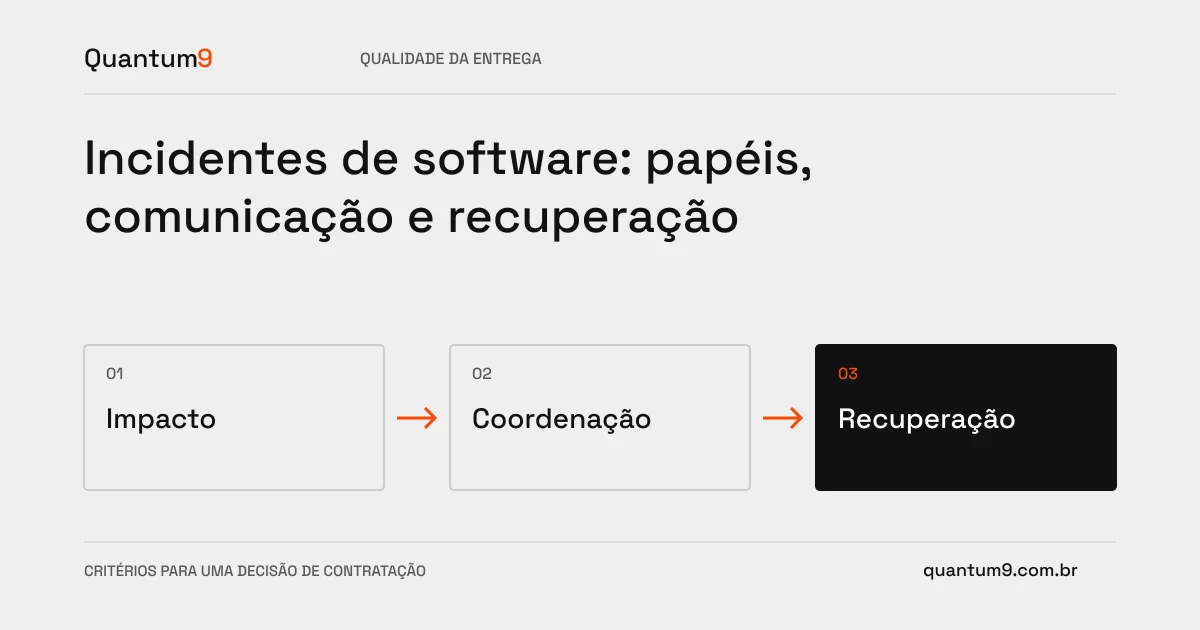
Classify incidents by impact and establish trigger criteria. Separate mitigation, recovery and permanent correction. Record actions and hypotheses with time to allow for later learning. Communication must inform known facts, next steps and uncertainties, without disclosing sensitive data or attributing cause before the investigation.
Criteria for comparing proposals
- Roles: identify coordination, technical execution and communication with affected audiences.
- Recovery: maintain tested procedures and authorization limits for actions with greater impact.
- Learning: record confirmed cause, contributing factors and improvements with those responsible.
A scenario to discuss with the supplier
Hypothetical example: two people try to retrieve the same service through different paths. Explicit coordination reduces the risk that one action will invalidate another.
What to validate upon delivery
Do a controlled exercise with a plausible scenario. Check if contacts, access and procedures are available and if the team can explain the status of the incident without improvisation.
Prepare the conversation about the project
Quantum9 can structure the technical process within the agreed support scope. Inform critical systems, staff and contracted coverage; the plan must reflect actual capacity, without assuming 24-hour operation.
Software engineering and quality · Map the company's priority