
Index
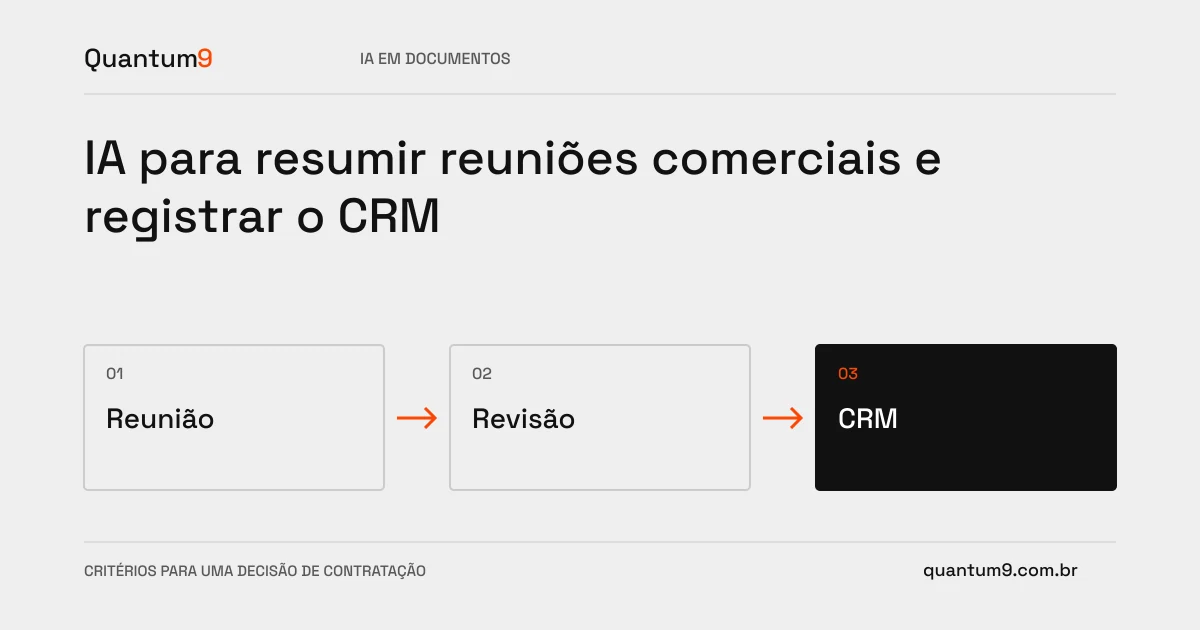
A business summary should preserve decisions, commitments and open questions. CRM integration needs to allow for review before turning a conversation into tasks or step changes.
How to evaluate this decision
Define how the meeting will be recorded with authorization and what information is required. Separate transcribed speech, summary and structured conclusion. Dates and responsible persons cited in an ambiguous manner must be confirmed. The system should not invent an acceptance, a need or a deadline just to fill in mandatory CRM fields.
Criteria for comparing proposals
- Capture: respect rules for participation, storage and access to the record.
- Structure: distinguish decision, hypothesis, objection and pending action.
- Publishing: Review account and opportunity links before saving tasks or changing states.
A scenario to discuss with the supplier
Hypothetical example: someone says they might be able to evaluate the proposal next week. Converting this into a confirmed commitment with a fixed date distorts the conversation. The summary must preserve uncertainty.
What to validate upon delivery
Compare summaries with authorized records and review names, numbers, dates and appointments. Test meetings with multiple projects to verify CRM attribution.
Prepare the conversation about the project
Provide Quantum9 with meeting sources, CRM fields, and approval flow. The first pilot should measure review effort and record quality, without assuming that all output is ready for automatic publication.
AI for processes · Map the company's priority