
Index
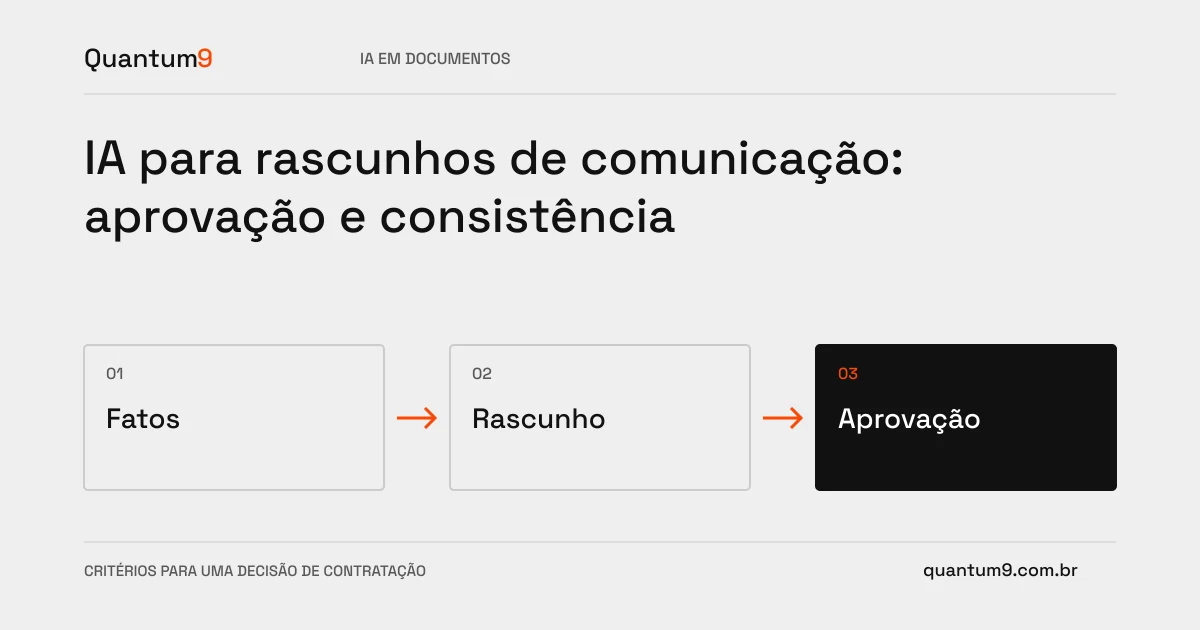
Generating a draft is different from authorizing its submission. An assisted communications solution needs to preserve facts, commercial boundaries, and editorial responsibility before publishing any message.
How to evaluate this decision
Define authorized sources, audience, and permitted types of communication. Information such as price, term and service condition must come from validated data. The model can adapt language, but not invent benefits or compromises. Separate text suggestions from sending actions and record the approved version when traceability is required.
Criteria for comparing proposals
- Context: provide pertinent facts and restrictions, avoiding unnecessary personal data.
- Review: Highlight numbers, promises and information that requires confirmation.
- Publishing: Control who approves and prevent silent changes between approval and submission.
A scenario to discuss with the supplier
Hypothetical example: the draft turns a delivery forecast into a guarantee. The review flow must identify this change in meaning before the message reaches the customer.
What to validate upon delivery
Test communications with incomplete information and nonstandard orders. Check if the system requests missing data and if the message sent corresponds to the approved version.
Prepare the conversation about the project
Inform Quantum9 of channels, approved examples and communication limits. The project can start with drafts reviewed by the team, measuring usefulness and necessary corrections before expanding automation.
AI for processes · Map the company's priority