
Index
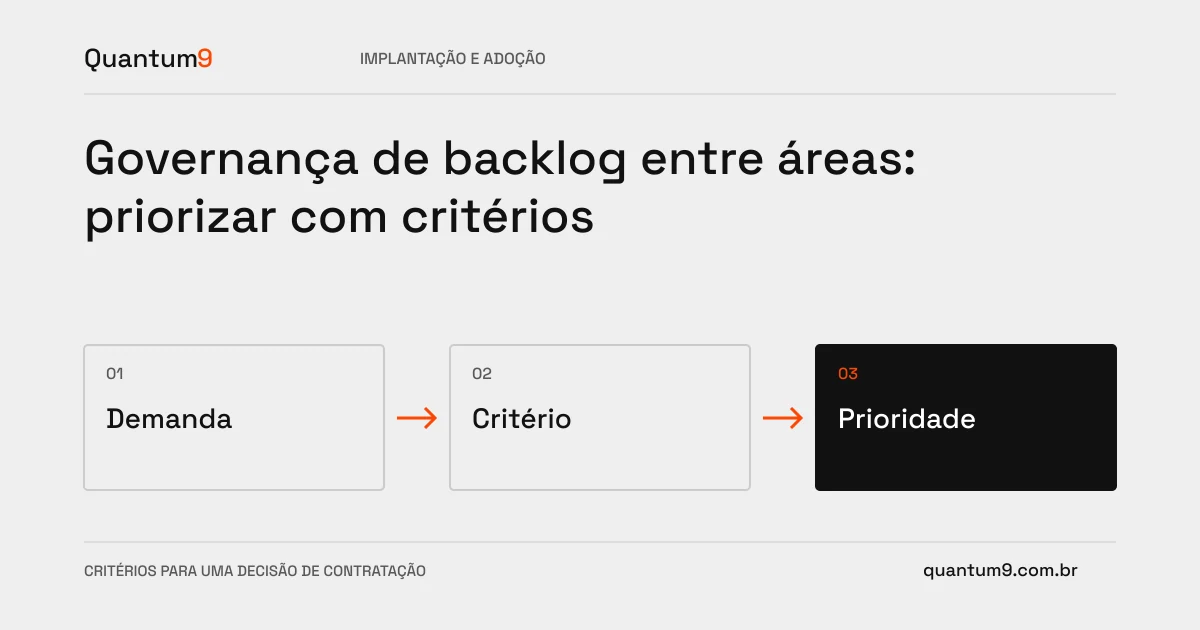
When each area considers its demand urgent, the backlog stops guiding decisions. Prioritization needs to make objectives, dependencies and deferral cost comparable, without replacing analysis by those asking most frequently.
How to evaluate this decision
Define a minimum format for demands and a decision forum proportional to the size of the operation. Separate incidents of improvements and obligations with a real deadline. Assess impact and effort with explicit uncertainties. A score can support the discussion, but it should not hide dependencies or false precision. Record why a demand came in or was delayed.
Criteria for comparing proposals
- Input: require problem, affected audience and expected result before detailing solution.
- Comparison: use shared criteria and recognize estimates that are still open.
- Capacity: Limit simultaneous work and review commitments when legitimate urgency arises.
A scenario to discuss with the supplier
Hypothetical example: a visual improvement competes for capacity with a recurring failure that interrupts orders. The decision needs to consider operational impact and frequency, in addition to the political visibility of each applicant.
What to validate upon delivery
Review recent decisions and check whether the criteria explain the chosen order. The team must be able to identify the next work and why, without renegotiating the entire backlog daily.
Prepare the conversation about the project
Quantum9 can organize product evolution with the company. Bring demands and constraints to structure a process that connects development to business priorities and maintains transparent commitments.
Software evolution and deployment · Map the company's priority