
Index
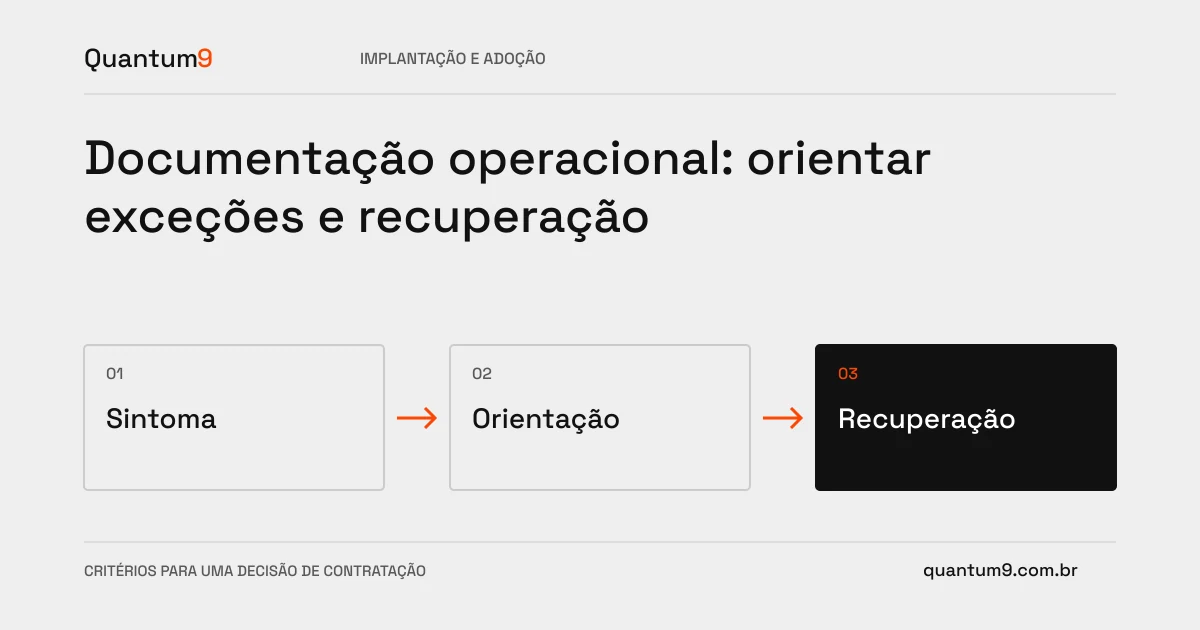
Helpful documentation explains what to do when the flow goes wrong. Screenshots of the optimal path help with getting started, but are not a substitute for diagnostic, accountability, and recovery instructions.
How to evaluate this decision
Start from the incidents and doubts that the operation needs to resolve. Differentiate actions allowed to the user from technical interventions. Define signals to stop an attempt and seek support, avoiding repetition that worsens the problem. Keep documents close to the product update flow, with a significant owner and review date.
Criteria for comparing proposals
- Scenarios: describe symptoms, checks and possible actions without assuming hidden knowledge.
- Limits: indicate when to escalate and what information to send to support.
- Maintenance: Review instructions when rules or screens change.
A scenario to discuss with the supplier
Hypothetical example: an integration is pending and the operator repeatedly clicks resend. A clear status query and escalation statement can avoid duplicate records or rework.
What to validate upon delivery
Ask someone who didn't write the document to follow a recovery scenario in a safe environment. Adjust ambiguous steps and ensure that no instructions rely on shared credentials or improper access.
Prepare the conversation about the project
Quantum9 can structure documentation alongside the implementation. Bring in known exceptions and operational paperwork to produce usable material, not just an inventory of screens handed out at closeout.
Software evolution and deployment · Map the company's priority