
Practices to accelerate deployments, reduce incidents and optimize infrastructure costs.
Index
Platform that enables, doesn’t hinder
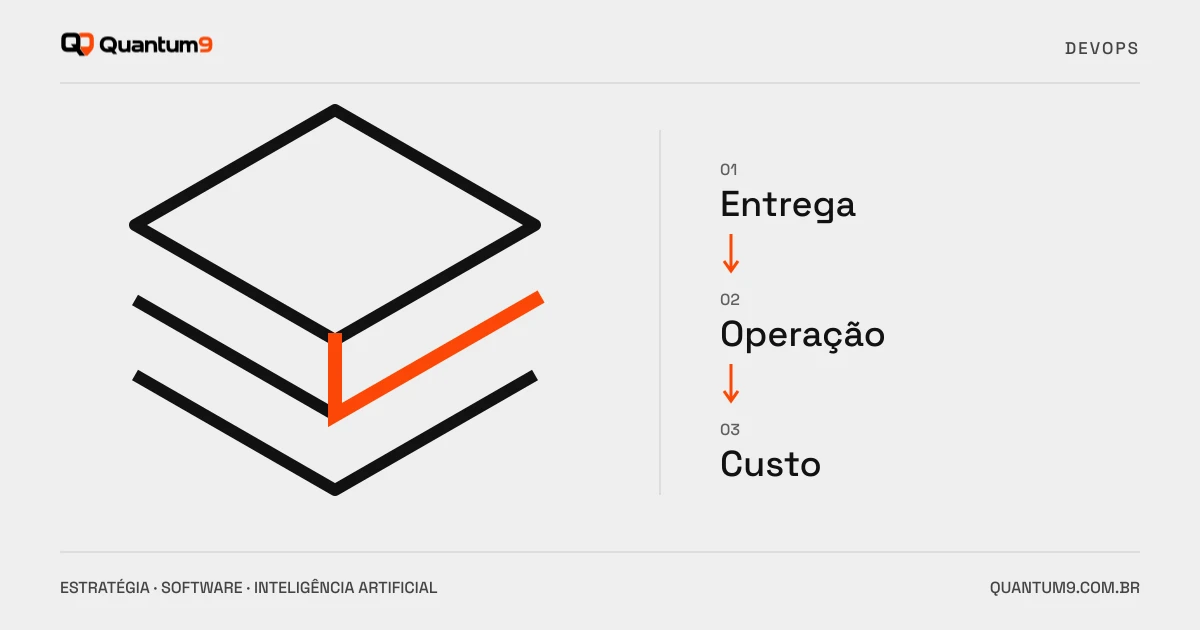
DevOps shortens the delivery cycle and reduces risk. FinOps brings cost visibility by product/feature and avoids surprises on the invoice. Together, they create a sustainable operation.
1. Patterned mat
CI/CD templates, minimum tests and checklists by type of service. golden paths reduce variation and onboarding time.
2. Practical observability
SLI/SLO metrics, actionable alerts and response playbooks. Distributed tracing reduces MTTR and avoids “culprit hunting”.
3. Costs under control
- Right-sizing guidelines per workload.
- Automatic shutdown and escalation policies.
- Cost and chargeback tags by team/product.
4. Security by default
Managed secrets, least privilege, dependency review and pipeline scanners.
5. Expected results
More releases, fewer incidents and predictable spending. The team focuses on delivering value, not “putting out fires”.
Want to speed up your treadmill and reduce costs? We make the diagnosis and deliver a prioritized evolution plan.
How to turn the topic into a hiring decision
Cost control starts by assigning consumption to applications and environments. Cutting resources without understanding the load can make the experience worse. Compare cost per useful operation along with stability and delivery time.
What to include in the scope
Include budget, alerts, assignees, and policy for temporary environments. On delivery, automate checks and maintain a return path. The infrastructure configuration must be reproducible and accessible to authorized personnel.
How to check delivery
Validate a deploy and rollback, check consumption alerts and identify unowned resources. Savings must be calculated over comparable periods and not over projections presented as results already achieved.