
Index
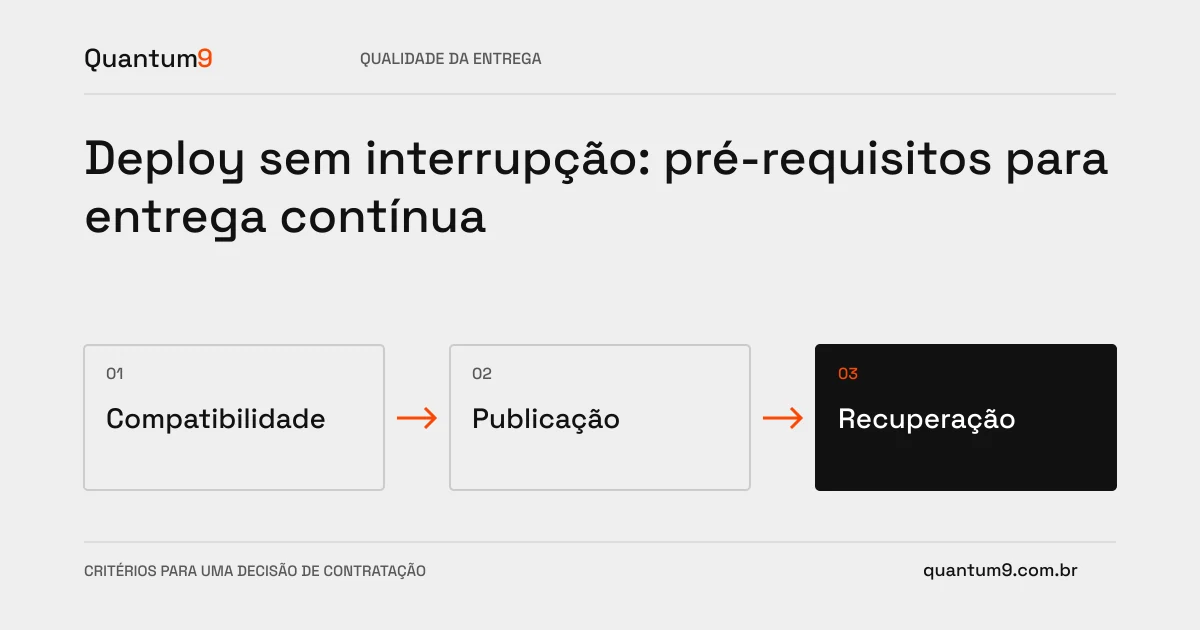
Publishing without interrupting use depends on compatibility between versions, infrastructure and data. The strategy should be chosen after understanding what changes and how the application maintains state.
How to evaluate this decision
Map sessions, in-progress tasks, and bank changes. A new version may need to coexist temporarily with the previous one. Incompatible schema changes require a sequence that preserves consumers during the transition. Define how to detect failure and return without losing recorded data after publishing.
Criteria for comparing proposals
- Compatibility: separate structure expansion and removal of old fields when necessary.
- Health: Validate journeys and dependencies before directing all usage to the new version.
- Rollback: explain rollback limits and handling of persisted changes.
A scenario to discuss with the supplier
Hypothetical example: the new version removes a field still used by old instances. Even with gradual traffic switching, the application may fail. The plan needs to coordinate code and bank.
What to validate upon delivery
Rehearse publishing with tasks in progress and a controlled failure. Check continuity and recovery within the established conditions, without transforming a deployment technique into an absolute promise of availability.
Prepare the conversation about the project
Take Quantum9 architecture, publishing frequency, and operational constraints. The scope must include compatibility, detection and return, in addition to automation of the deploy command.
Software engineering and quality · Map the company's priority