
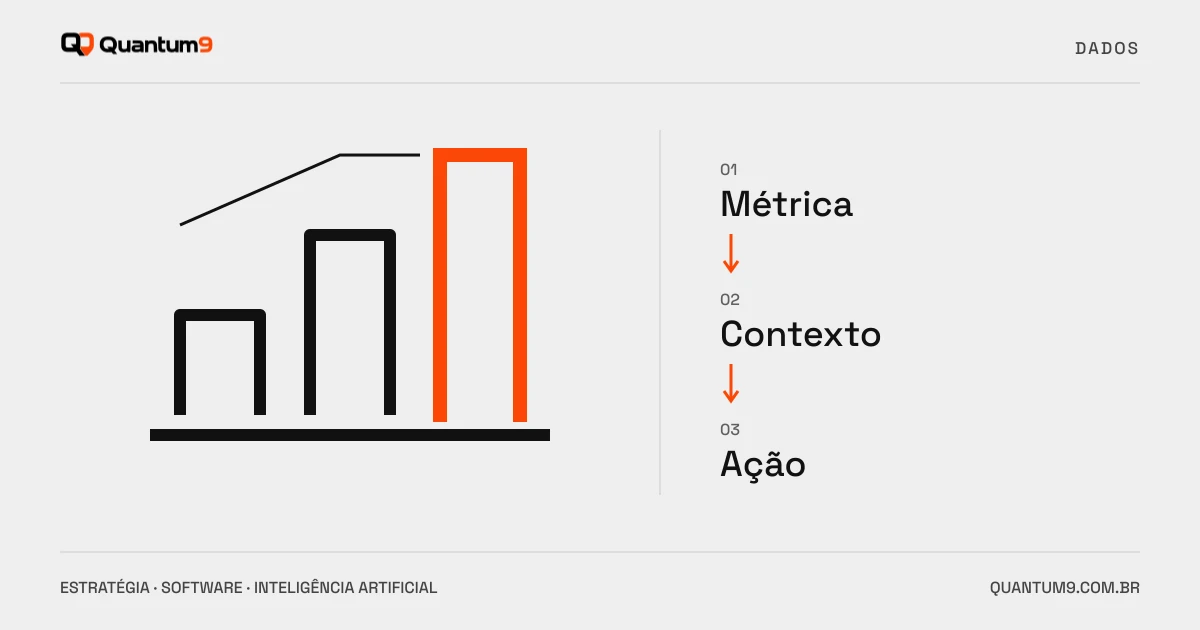
From event to actionable insight: how to build a simple and effective data stack.
Index
Decisions driven by data, not opinion
Without telemetry, roadmaps become bets. A lightweight stack (event collection, storage and visualization) already allows you to answer business questions on a weekly basis.
1. Essential events
- Activation of the main feature (Aha moment).
- Recurring engagement (WAU/MAU, feature usage).
- Conversion by channel and campaign.
2. Lean pipeline
Collection via dataLayer + warehouse ingestion (e.g. BigQuery/Postgres) + simple dashboards. Start with few responding events business questions.
3. Governance
Event catalog, owners by domain and conventions (nomenclature, types). Avoid an uncurated “event for everything.”
4. Weekly Decisions
Wheel: formulate hypothesis → launch experiment → measure → decide. This aligns product, marketing and sales.
Do you want to set up your database? We deliver blueprints with events, tables and first panels.
How to turn the topic into a hiring decision
Define a recurring decision that the company cannot make with confidence. An SME can start with a few consistent indicators, rather than bringing all the sources together into one large project.
What to include in the scope
Document formula, source, period and person responsible. Sales, billing, and receipt data answer different questions. Show the last update and identify gaps before creating comparisons.
How to check delivery
Reconcile a known period and ask the manager to use the panel in a real decision. The criterion is not quantity of graphs, but understanding and ability to investigate variations without reconstructing the entire base.