
Index
The architecture needs to fit the team's operating capacity. Containers can make packaging easier, but they don't eliminate updating, monitoring, and responding to failures.
How to evaluate this decision
Compare execution, portability, and control requirements with operational effort. Managed services can reduce some responsibilities and introduce specific limits or dependencies. The choice must consider the existing environment and available skills. Avoid adopting a complex platform just because you expect growth without evidence.
Criteria for comparing proposals
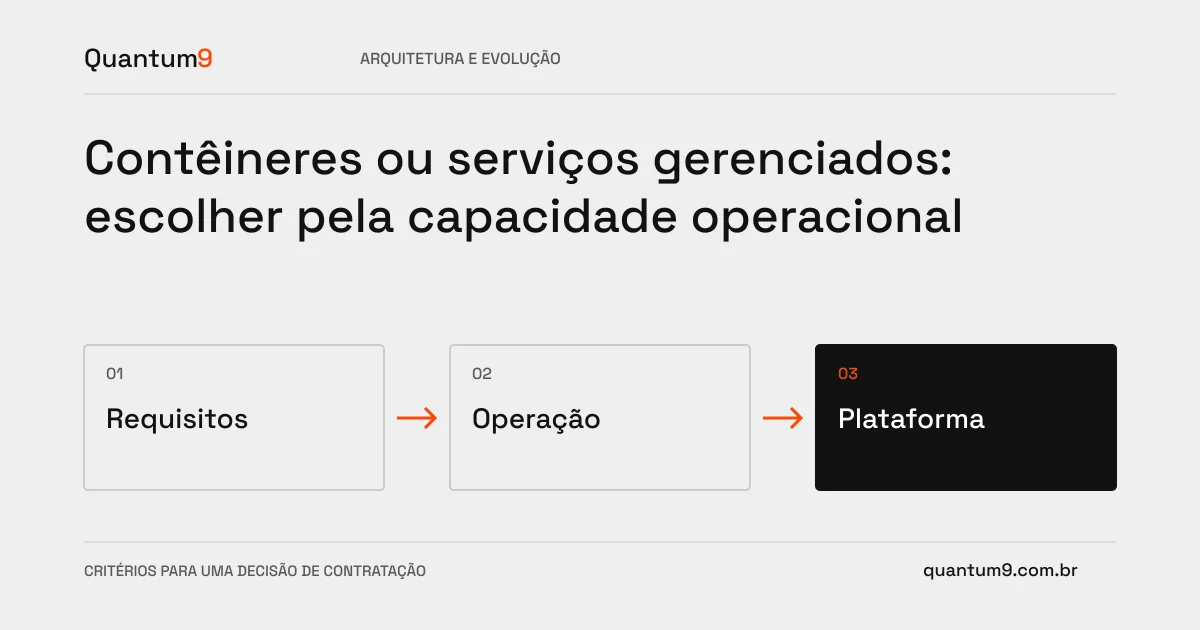
- Execution: Check long tasks, dependencies, network, and state needs.
- Operation: assign updates, observability, recovery and cost management.
- Output: understand which parts can migrate and which need to be adapted.
A scenario to discuss with the supplier
Hypothetical example: a small application needs scheduled processing and managed banking. Introducing complex orchestration can increase maintenance without improving the journey that motivated the project.
What to validate upon delivery
Deploy a representative version and perform upgrade and crash recovery. Compare the procedure required of who will be responsible, not just the ease of the first deployment.
Prepare the conversation about the project
Quantum9 can evaluate the architecture and implement the chosen operation. Bring requirements, team, and constraints into a recommendation based on lifecycle, not tool preference.
Software architecture · Map the company's priority