
Analyze reasons removing a tool from production planning without adding simultaneous states as independent durations.
Index
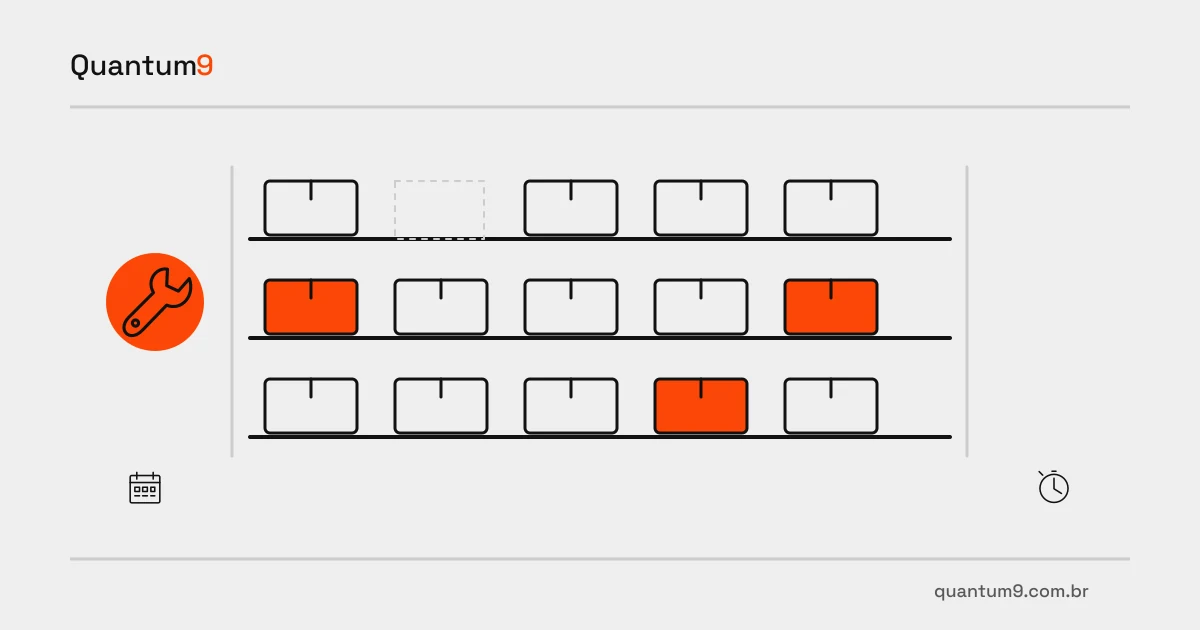
A tool can be reserved and require repair during the same period. Adding unavailable time from separate reports duplicates duration and misrepresents lost capacity.
The unit of analysis determines the result
The model should identify physical tooling and intervals for reservation, use, checking and repair. Define how states combine to represent availability; source states need not be mutually exclusive. Unavailable duration uses the union of intervals while reason analysis can retain visible overlap.
A native query may suffice when events share identity. Data engineering helps when booking and maintenance use different records or physical checkout arrives from another source. Do not classify all non-production time as idleness: setup and waiting for checks have their own operational meaning.
Requirements for comparing BI proposals
- Keep individual tools or identified sets consistent across the sources involved.
- Define display priority for reasons without deleting simultaneous states needed for analysis.
- Show events without end times and the reference date used for ongoing duration.
A check before using the measure
In a hypothetical scenario, repair overlaps a canceled reservation. Check unavailable duration without summing both intervals in full. Then inspect reasons to verify both remain visible. Correcting a checkout date must update analysis traceably instead of merely changing the total without explaining which source event was revised.
Reference for assessing scope
Microsoft Learn: facts, dimensions and analytical model grain
Prepare your project with Quantum9
Bring tooling reservations, checkouts and interventions to Quantum9 to define identity and interval calculation.