
Index
An overloaded database may reflect inefficient queries, contention or inappropriate use of the application. The analysis needs to relate consumption to the journey and identify the cause before expanding resources.
How to evaluate this decision
Observe queries, frequency and competition with authorized access and without exposing unnecessary data. Differentiate isolated expensive operations from excessively repeated small calls. Index or model changes are costly to write and maintain, so they must be evaluated in context. Do not apply adjustments in production without knowing their impact and possibility of reversal.
Criteria for comparing proposals
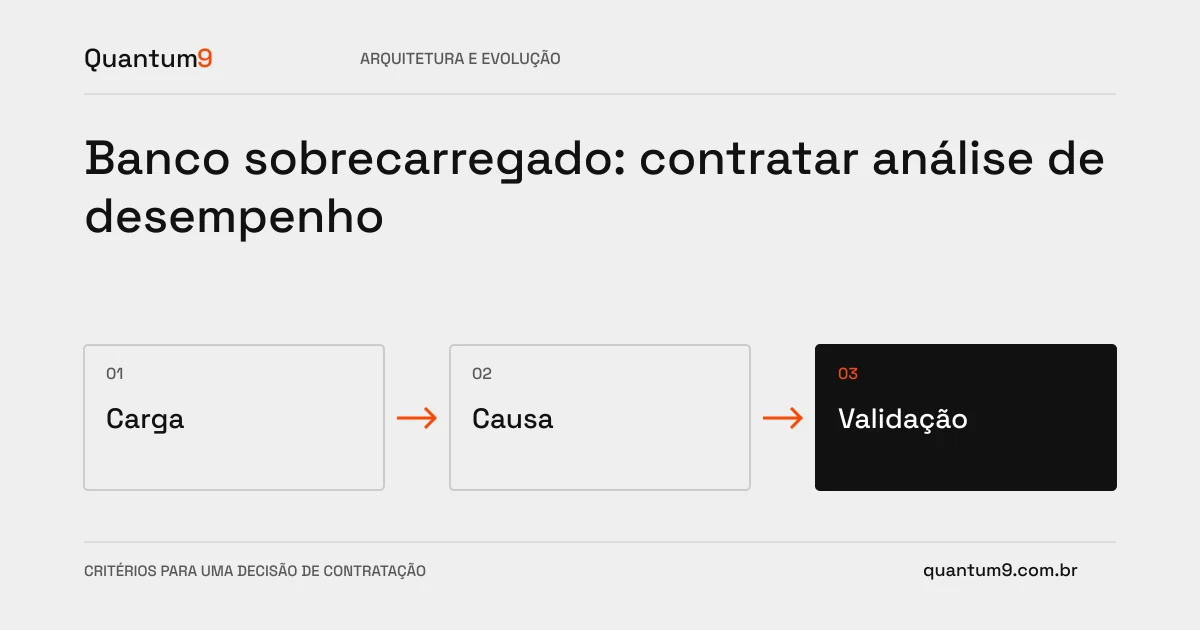
- Evidence: gather times, plans and execution volume relevant to the bottleneck.
- Hypothesis: explain the likely cause and how the change will be tested.
- Validation: compare reading, writing and consumption in representative conditions.
A scenario to discuss with the supplier
Hypothetical example: a screen triggers one query per line displayed. The solution may lie in the application's access pattern, and not in increasing the bank's capacity.
What to validate upon delivery
Reproduce the scenario and measure after the intervention. Check that less frequent queries have not regressed and that the change remains stable under competition.
Prepare the conversation about the project
Quantum9 can diagnose bank usage in the system. Report technology, symptoms and critical journeys; the scope must separate analysis, correction and monitoring of the result.
Software architecture · Map the company's priority