
Index
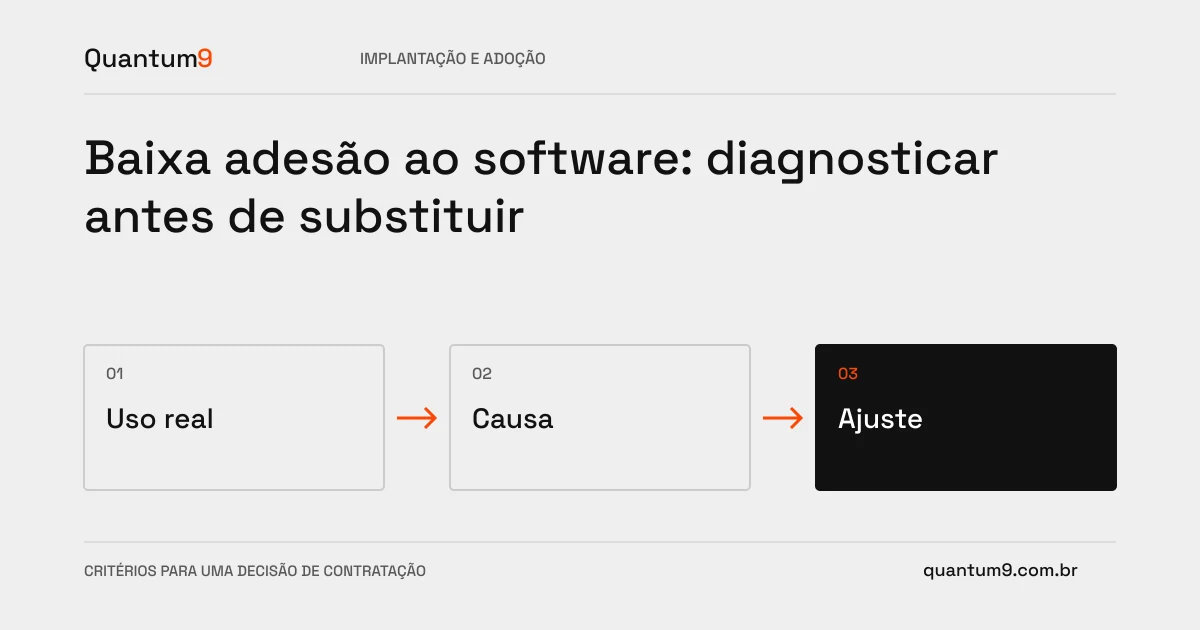
When the team avoids a system, the problem may be with the tool, the process, or the conditions of use. Buying another platform without understanding the cause can reproduce the same difficulty.
How to evaluate this decision
Observe real tasks and compare the predicted flow with the executed one. Identify duplication of work, unavailable data, slowdowns, and rules that don't match the operation. Listen to who uses it and who depends on the result. Differentiate between lack of training and functional inadequacy. Prioritize changes that remove impediments rather than requiring more records without explaining their usefulness.
Criteria for comparing proposals
- Evidence: locate points where the user abandons the system or creates parallel controls.
- Cause: Separate interface, integration, policy, and staging issue.
- Decision: compare correction, evolution and replacement by effort and expected benefit.
A scenario to discuss with the supplier
Hypothetical example: salespeople maintain a spreadsheet because the CRM does not show the approved business condition. Duplicity can be resolved by integration or process adjustment, without necessarily changing the CRM.
What to validate upon delivery
Monitor the task after the change and check whether parallel control is no longer necessary. Forced use or more logins do not alone demonstrate that the operation has improved.
Prepare the conversation about the project
Take avoided flows, complaints and systems involved to Quantum9. The diagnosis must produce verifiable causes and proportionate alternatives before recommending reconstruction or new hiring.
Software evolution and deployment · Map the company's priority