
Index
Outdated dependencies can block maintenance and compatibility. The update must be planned by impact, avoiding mixing a technical migration with unnecessary functional changes.
How to evaluate this decision
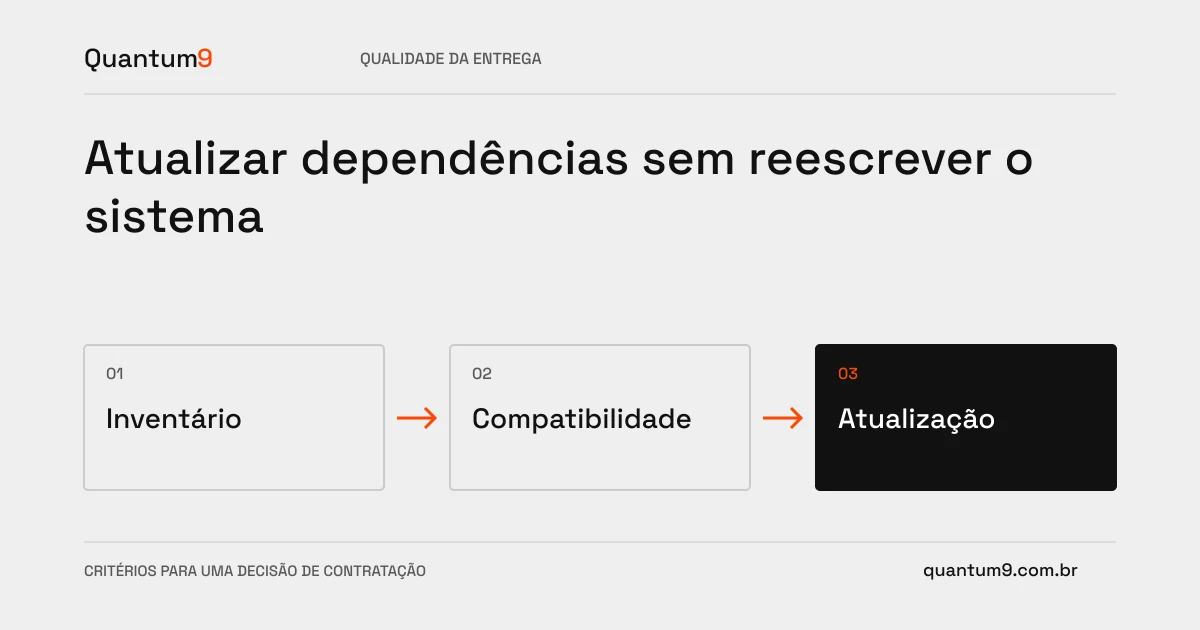
Inventory direct and indirect versions and dependencies. Consult official notes and identify incompatible changes. Define a sequence with verifiable milestones, especially when multiple intermediate versions change APIs. Taking advantage of the upgrade to refactor everything makes it harder to find regressions and increases the risk of the cycle.
Criteria for comparing proposals
- Priority: relate update to support, compatibility and known risks.
- Protection: Select tests and journeys affected by changed libraries.
- Publishing: Separate changes into understandable batches and maintain fallback strategy.
A scenario to discuss with the supplier
Hypothetical example: updating an authentication component changes session behavior. Validation needs to include recovery and expiration, not just compiling the application.
What to validate upon delivery
Run appropriate build and test, then check journeys in a representative environment. Record final versions and pending issues that were left out of the cycle.
Prepare the conversation about the project
Bring Quantum9 inventory or access to code, restrictions, and known flaws. The diagnosis must propose a viable sequence, without assuming that every update requires a rewrite.
Software engineering and quality · Map the company's priority