
Index
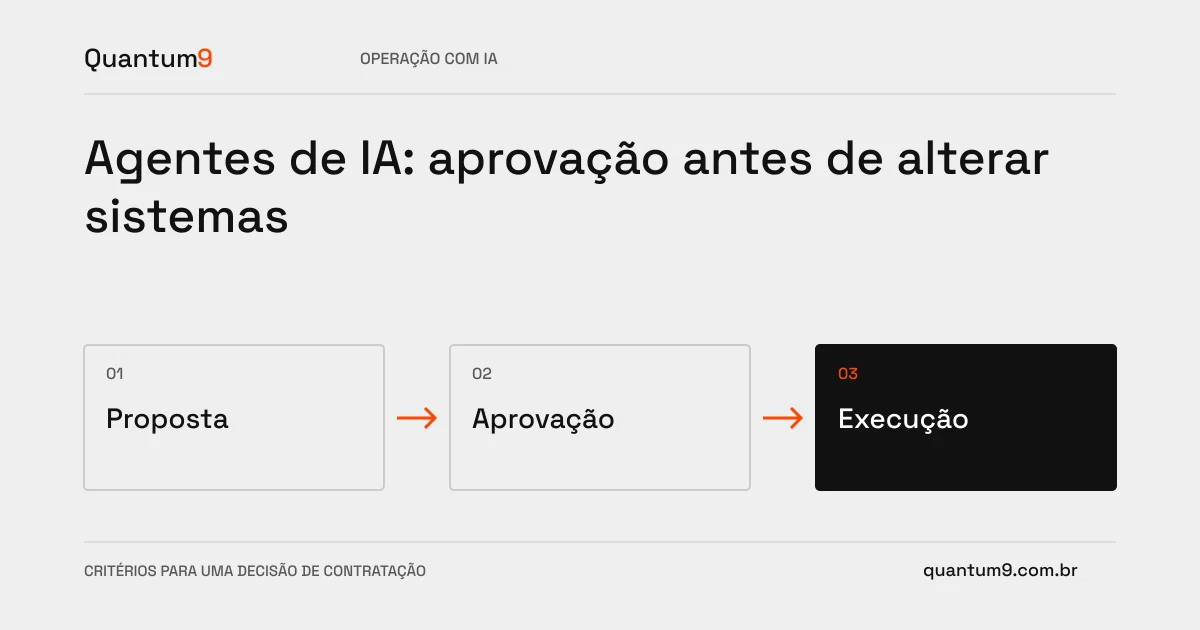
An agent who suggests a change and an agent who carries it out have different responsibilities. Hiring needs to define which actions are automatic, which require approval, and which are out of scope.
How to evaluate this decision
Classify actions by impact and possibility of reversal. Authorization must be checked at run time using the current user and registry context. A generic approval must not allow subsequent changes to the content of the action. Separate the agent's proposal from the operation actually sent to the system.
Criteria for comparing proposals
- Preview: show object, change and consequence in language that the approver understands.
- Execution: link approval to the specific operation and prevent undue repetition.
- Audit: record proposal, decision and result without exposing secrets or unnecessary data.
A scenario to discuss with the supplier
Hypothetical example: the agent suggests changing a deadline, but the contract is updated before approval. The application must revalidate the condition and request a new decision if the proposal no longer corresponds to the current status.
What to validate upon delivery
Test refusal, approval expiration, concurrent change, and lost response. Check that the agent cannot bypass the control through another application route.
Prepare the conversation about the project
Inform Quantum9 of desired actions, roles and operational consequences. The pilot must start with a restricted set and demonstrate control of the execution, in addition to the quality of the suggestion.
Development with agentic AI · Map the company's priority