
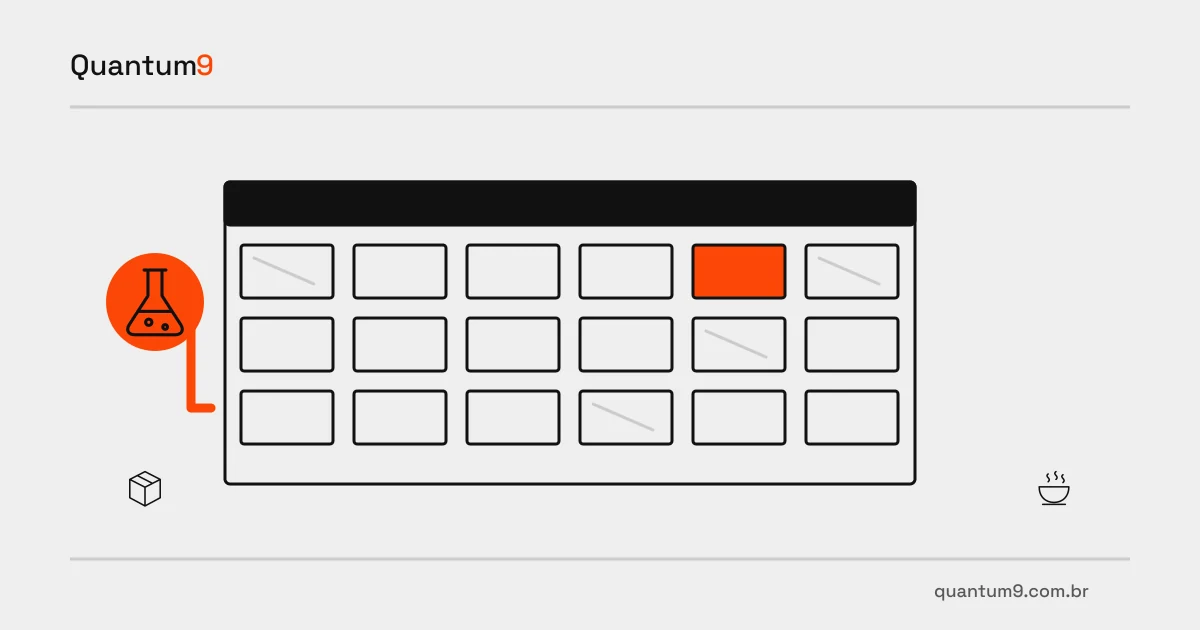
Bookings must account for setup, execution and release under internal procedures instead of deriving capacity solely from test duration.
Index
Equipment can appear free between tests while still requiring setup; the schedule must show that operational occupation.
The rule that changes the scope
Bookings must account for setup, execution and release under internal procedures instead of deriving capacity solely from test duration.
A calendar covers simple reservations; a custom module combines resource, operator and sequence between samples.
Duration may vary by method and the preceding sequence, so a schedule must not apply one universal interval without internal validation. Sample preparation by another team can also be a dependency. Show those relationships in the proposal and test. A provisional booking helps planning but should not share the final authorization state when equipment, operator availability or confirmation of the appropriate sample is still missing.
Specify operational deliverables
- Associate reservations with the test type and equipment specified by its owner.
- Show setup intervals separately from planned execution time.
- Record cancellations and identify resources or samples already prepared.
Test the exception before acceptance
In a hypothetical scenario, a test is canceled after equipment setup; the next booking must consider the actual condition rather than merely delete the event.
Reference for assessing scope
NN/g: writing task scenarios for usability testing
Prepare your project with Quantum9
Bring a schedule with different tests and the internal setup intervals used.