
Learn how data engineering connects ERP, CRM, and other sources to provide reliable information for operations and management.
Index
Data engineering involves collecting, organizing, transforming, and making information available so that systems, reports, and teams can confidently work from the same data. It creates the path between sources—such as ERP, CRM, spreadsheets, and customer service platforms—and how the data is ultimately used. That path needs to keep working when volumes grow, a field changes, or a data load fails.
In practice, a business usually needs data engineering when getting an answer requires exporting files, combining versions, and checking figures manually. The goal goes beyond centralizing everything: it makes clear where each piece of information came from, which rule was applied, when it was updated, and what to do when something goes wrong.
What does a data engineer build?
The main deliverable is a reliable flow of data. It can start with a daily integration between two systems or develop into a platform serving multiple departments. Its design depends on the decision the business needs to make, the required update frequency, and access restrictions.
- Connectors: read from APIs, databases, files, and events without relying on manual copying.
- Data pipelines: move and transform records through traceable steps.
- Storage layers: separate incoming data from processed data that is ready to use.
- Quality rules: detect duplicates, missing data, invalid formats, and significant discrepancies.
- Monitoring: flags delays, failures, and unexpected volumes before an incorrect report is used.
- Documentation: records the meaning, source, owner, and update details of each piece of information.
Example: from ERP and CRM to a sales metric
Consider a company that records opportunities in its CRM and orders in its ERP. Sales tracks proposals; finance tracks invoicing and payments received. If each team exports its own spreadsheet, the same customer may appear under different names, and dates may represent different events.
A pipeline can read both sources, preserve the original records, standardize identifiers, and link opportunities, orders, and payments. Before publishing the results, it checks required fields, duplicates, and control totals. The dashboard then shows when the load completed and flags incomplete periods. Management can distinguish agreed sales amounts, invoiced amounts, and payments received without collapsing different concepts into a single “revenue” figure.
Are data engineering, data analysis, and BI the same thing?
No. These disciplines complement one another but address different parts of the problem. Data engineering prepares and maintains the path the data follows. Data analysis investigates questions and patterns. BI organizes metrics and visualizations for ongoing monitoring.
A dashboard can have an excellent interface and still show unreliable figures if its sources and rules are not controlled. Likewise, a technically sound data foundation does not create value on its own: someone needs to define which decisions it should support. That is why a business project starts with the question and the people responsible, rather than automatically choosing a tool.
When does your business need data engineering?
The most useful signs appear in everyday work. One sign alone does not call for a complex platform, but several together suggest that the current flow may not be able to support operations.
- The same report requires combining files from multiple systems every month.
- Departments report different totals for the same metric, and nobody can identify the source of the discrepancy.
- An integration fails without warning, and the problem only becomes apparent during a meeting or period-end close.
- Historical data changes when the source is updated, making it impossible to reconstruct what was known at an earlier date.
- Important spreadsheets depend on one specific person to update formulas and handle exceptions.
- Automation or AI projects are stalled because the data lacks quality, context, or clearly defined permissions.
What is a data pipeline?
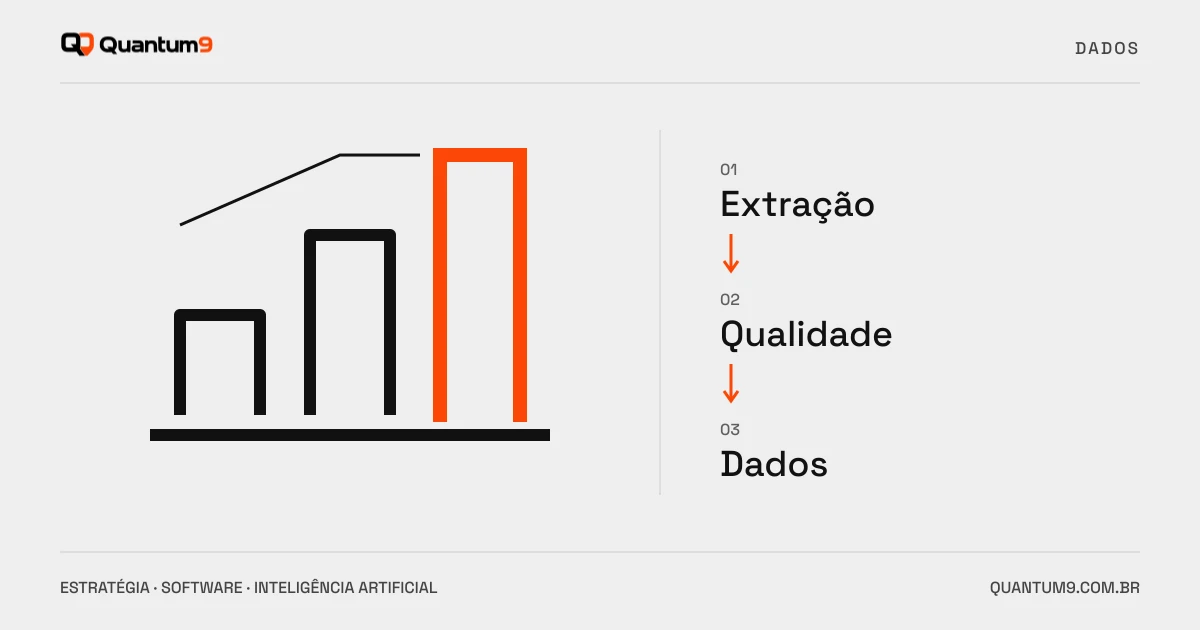
A data pipeline is an automated sequence that moves information from source to destination. It typically includes extraction, validation, transformation, storage, and publication. A reliable pipeline also logs its runs, allows a period to be reprocessed safely, and prevents duplicate results when a step is repeated.
Real-time processing is not mandatory. An operational alert may tolerate only a few minutes of delay; a monthly report may be served by a daily load. Higher frequency increases cost and complexity, so the decision should follow operational needs. To assess scope, testing, and delivery, read our guide on how to commission a reliable data pipeline.
How to get started without building more platform than you need
- Choose a recurring decision. Define the question, who uses the answer, and what happens next.
- Map your sources. Document access, ownership, identifiers, volume, and update frequency.
- Define the concepts. Specify formulas, reference dates, filters, exclusions, and how cancellations are handled.
- Create quality controls. Compare record counts and known values before making the results available.
- Plan for failure. Define alerts, ownership, retries, and the recovery procedure.
- Deliver in stages. Validate one source and one complete use case before expanding the scope.
How to evaluate a data engineering proposal
The proposal should identify sources, destinations, transformations, frequency, volumes, permissions, and acceptance criteria. Ask for a demonstration of how the solution detects and recovers from a failure. Confirm who will maintain connectors, rules, and documentation after deployment.
Also compare recurring costs for storage, processing, data transfer, and external tools. These vary with architecture and usage; a responsible estimate states its assumptions rather than promising a one-size-fits-all price. Avoid proposals that treat technical access as unrestricted authorization: personal, financial, and business data require purposes and controls appropriate to the operation.
FAQ
Does a small or medium-sized business need a data lake?
Not necessarily. Many businesses gain value by starting with a controlled integration and a smaller analytical data store. The architecture should grow when the sources, volume, history, and use cases justify the change.
Does data engineering replace the ERP?
No. The ERP remains responsible for its own processes and records. Data engineering connects sources and prepares data for use across systems while preserving its origins and ownership.
Can you start with spreadsheets?
Yes, provided the source, format, owner, and routine are defined. Problems arise when a spreadsheet becomes an unmonitored integration without version control, validation, or failure alerts.
How long does a project take?
It depends on the number of sources, how reliable and usable access is, the rules, and the required update frequency. A clearly scoped first flow lets you assess uncertainties before estimating larger stages.
Next step
List the sources involved, the report or process that currently requires manual work, and an example of a discrepancy. Quantum9 can map the flow, define controls, and build an initial deliverable with a scope you can verify. Learn about data engineering or request an assessment.
 Português
 English
 Español